Creating room dividers using pocket doors in open spaces
Flexible living is a buzz-phrase you may have heard without really thinking about what it means. But it is a status of home life and workplace life that many people are now trying to achieve. In modern times everybody is seeking to maximise space and live efficiently, and that means using every spare inch of space effectively and reducing wastage as much as possible. The pocket door is already a welcome solution to this problem, in that, compared to the traditional hinged door it can create up to ten square feet of additional space, because it opens into an adjacent wall cavity and not directly into a room. But pocket door systems offer another innovative interior solution also, and that is the ability to create flexible spaces.
What is a flexible space?
In the quest to make as much use of a space as possible we need to create flexible spaces. This is essentially an area of a home or a workplace that can be used for different purposes at different times. So instead of having two separate spaces for two separate purposes, we can use one space for two separate purposes. The key to this is the pocket door, which can be operated to open and divide a room according to what you need.
Using pocket doors as a room divider offers great flexibility and means you can seamlessly connect spaces or separate spaces according to the time of day, or according to what you plan to do. Pocket doors achieve this by opening into wall cavities and have a much bigger effect if you have sufficient wall space to accommodate double pocket doors. This eliminates the space required for traditional hinged doors and also creates versatility and the ability to zone spaces as required, so that a space can be small, intimate and private or larger, open and communal.
The benefits of creating flexible spaces with pocket doors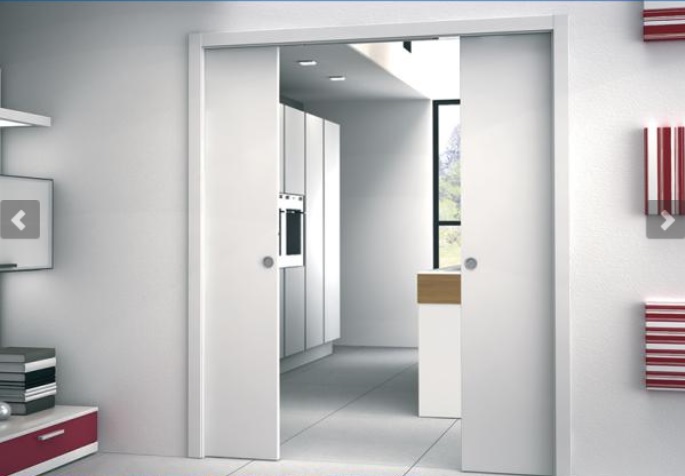
Using a pocket door to divide a room or open up a room provides the following benefits:
- Space – You have more space for furniture placement or for installing features, which enables you to accommodate different needs and quickly adapt a space to meet those needs. For example, you can have a small desk in a dining room which is used for a home office and also have a large dining table for when entertaining or having family dinners. This space can also be opened up to join with a kitchen or a living room to create an even bigger, inter-connected space.
- Flexibility – You can close rooms off during the day for working, study or reading, and then later in the day you can open these spaces up when the kids return home and you want a more open, communal feel to the home. In a workplace, you can use areas for temporary offices or meeting spaces, and then open them up for more open plan offices or for product demonstrations or training exercises.
- Visual appeal – Pocket doors are neat and minimalist, which is ideal for a contemporary office or domestic setting. They are slick and seamless and the unfussy way they disappear from view is perfect for modern spaces which strive for efficiency and a lack of clutter.
- Energy efficiency – By zoning larger spaces and making them smaller spaces you are better able to manage heating and lighting, meaning for certain times of the day you only need to control a small space rather than a large space, and this could reduce your energy bills in the long run.
How to create a flexible space with a pocket door room divider
- Wall space – In a large open plan space it is much easier to draw up a plan to build a new stud wall which can accommodate the pocket cavity. But don’t forget you will need wall space for both the door and the pocket, so you need to measure and allow for twice the width of the door.
- Location – Do you have sufficient space to carry out the activities you want to? This could be dividing a large room and creating a home office during the day and then making it a family TV room in the evenings. Or it could be a room for intimate meals at the weekend or for entertaining friends at other times. Similarly, in the workplace you might need temporary meeting rooms where there is privacy and quiet, in the middle of an open plan office space where many team members are working. Do you have enough space for all that? And are you able to locate the stud walls and pocket door cavities in the right locations?
- Insulation – You may need to think about sound and air insulation when planning to divide a room using pocket doors. Although pocket doors are able to restrict sound travel and can maintain stable temperatures, they are not solid walls and won’t be as effective as solid walls in this regard. Pocket doors used as dividing walls are meant to be flexible and to act as temporary walls, so consider how important sound and air insulation will be for these flexible spaces.
Using pocket door systems as room dividers allows you to bring a new dimension to an open space, and rather than having large spaces wasted for most of the day or week, you can much better utilise the available space and improve your space efficiency. Ultimately this can reduce your costs and means you are fully maximising what you have.
‹ Go Back